What Kuwait Taught Me About Human Development
Updated: Jul 24
(Originally inspired by research conducted while pursuing graduate studies at Princeton University.)
When people think about development, they often think about money: Countries seek economic growth, governments pursue investment, or policymakers focus on increasing income and expanding opportunities.
While these goals matter, one of the most important lessons I learned during my studies at Ohio State and at Princeton was that wealth alone does not necessarily translate into human flourishing. That realization led me to explore a question that continues to shape how I think about leadership, institutions, and community development today: What allows some societies to transform economic resources into lasting improvements in people’s lives while others struggle to do so?
To investigate this question, I examined Kuwait’s Human Development Index (HDI), a measure developed by the United Nations Development Programme to assess human wellbeing beyond economic output. Unlike Gross Domestic Product (GDP), which focuses primarily on economic production, the HDI incorporates indicators of health, education, and living standards to provide a broader picture of development. Kuwait presented an intriguing case study.
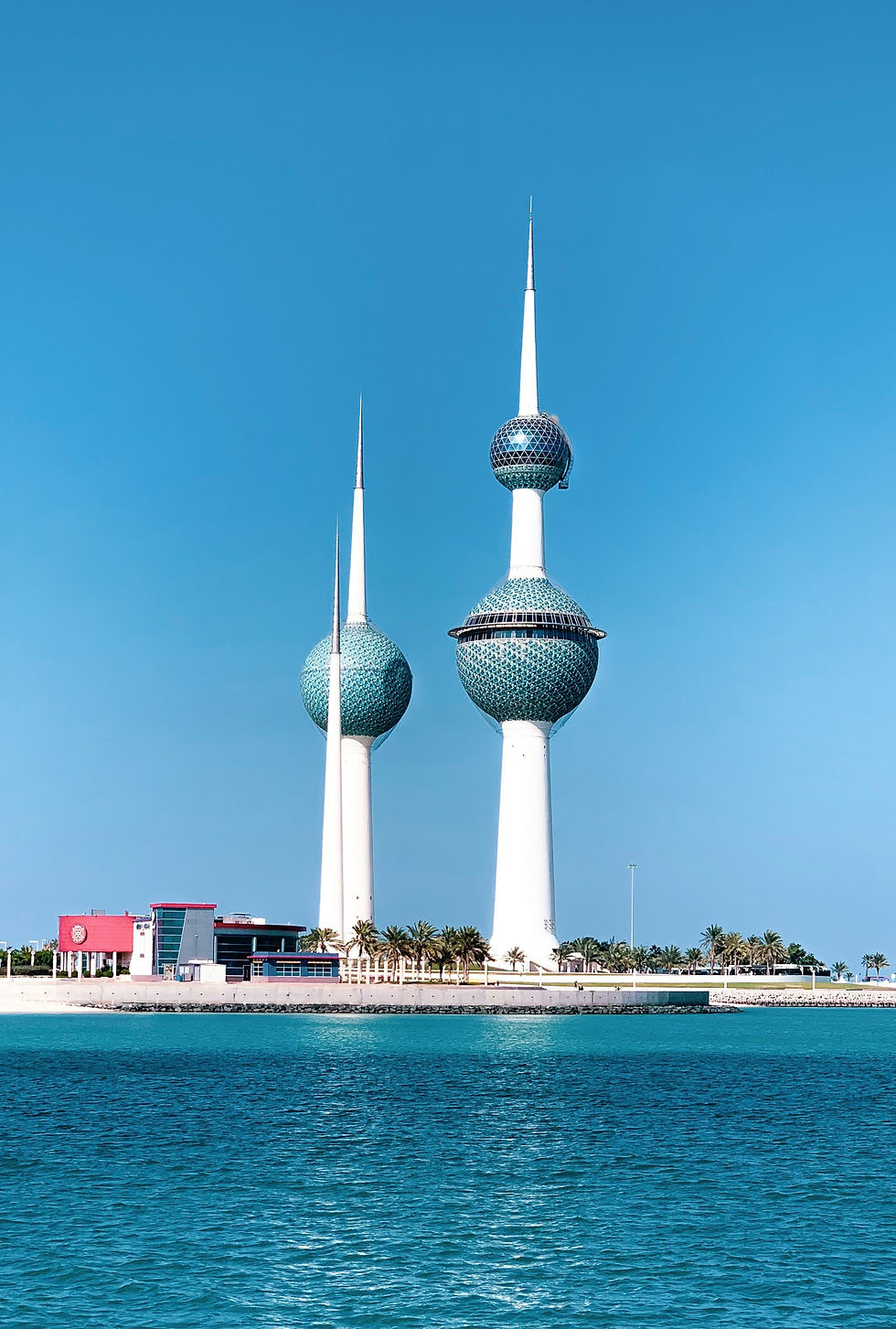
For decades, the country benefited from substantial oil revenues and achieved one of the highest Human Development Index rankings in the Arab world. Yet despite maintaining considerable wealth, Kuwait’s relative HDI ranking began to decline after 2010. This raised an important question: Why might a country with significant resources struggle to maintain its relative standing in human development?
Using time-series analysis, I explored the relationship between government revenues, oil prices, education expenditures, health expenditures, and human development indicators over time. My goal was not simply to understand Kuwait’s experience but to better appreciate the complex relationship between resources and human wellbeing.
What fascinated me most was the distinction between temporary wealth and long-term capability. Oil revenues can generate enormous financial resources, but natural resources alone cannot educate children, strengthen institutions, improve healthcare systems, or foster civic engagement. Those outcomes require intentional investments in people and the systems that support them.

This idea echoes the work of economist Mahbub ul Haq, one of the architects of the Human Development Index. He argued that development should ultimately be measured not by the accumulation of wealth but by the expansion of human capabilities and opportunities. In other words, people are both the means and the ends of development.
Years later, I find myself returning to this insight frequently.
Whether working in humanitarian assistance, international development, philanthropy, or education, I have repeatedly observed that sustainable progress depends less on the resources available than on how effectively communities invest those resources in people.
The same principle applies to schools. Schools operate within financial constraints and opportunities just as governments do. Budgets matter. Facilities matter. Technology matters. Yet none of these alone determine whether students flourish. What matters most is how resources are used to strengthen relationships, cultivate learning, support wellbeing, and create conditions in which people can thrive.
In many ways, the questions I explored through Kuwait’s Human Development Index continue to inform my understanding of educational leadership today:
How do we translate resources into opportunity?
How do institutions balance short-term needs with long-term sustainability?
How do leaders ensure that investments ultimately improve human wellbeing rather than simply increasing organizational capacity?
These questions remain as relevant in schools as they are in governments. While the statistical models and econometric techniques used in this project were valuable learning experiences, the most enduring lesson was far simpler: true development is ultimately about people. Economic growth can create possibilities. Strong institutions can create stability. Thoughtful leadership can create direction. However, human flourishing occurs when communities intentionally invest in the health, learning, dignity, and potential of the people they serve.
That lesson continues to guide my work today...
⸻
Interested in the full analysis?
Download the original research paper examining Kuwait’s Human Development Index and the relationship between government revenues, public expenditures, and human development outcomes.


Comments